A machine.
A breath.
A melody.
Ventus Reed I is an automated soprano recorder: a project in turning airflow, finger movements, and precisely timed signals into music.
Read the engineering journal ↗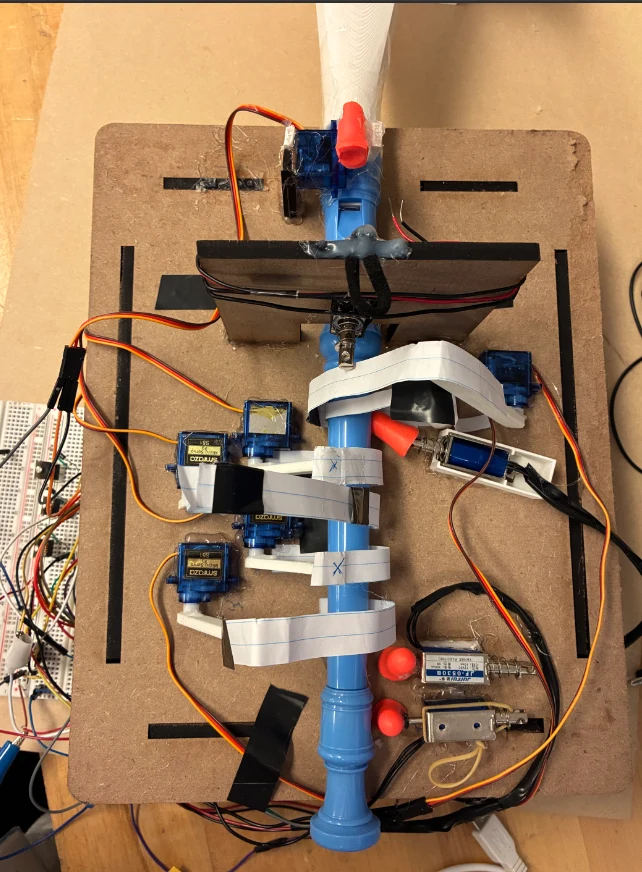
- PROJECT
- Ventus Reed I
Automated soprano recorder - TEAM
- Ash Wang · Alice Liu · Grace Luo
- MATERIALS IN THIS ARCHIVE
- Engineering journal · CAD files
Control code · Code iterations
What does it take
to play a note?
A recorder asks for more than air. It needs a stable stream through a narrow windway, finger holes sealed in the right combinations, and clear starts, stops, and rests. Our design treated these as connected mechanical and control problems.
Give it breath.
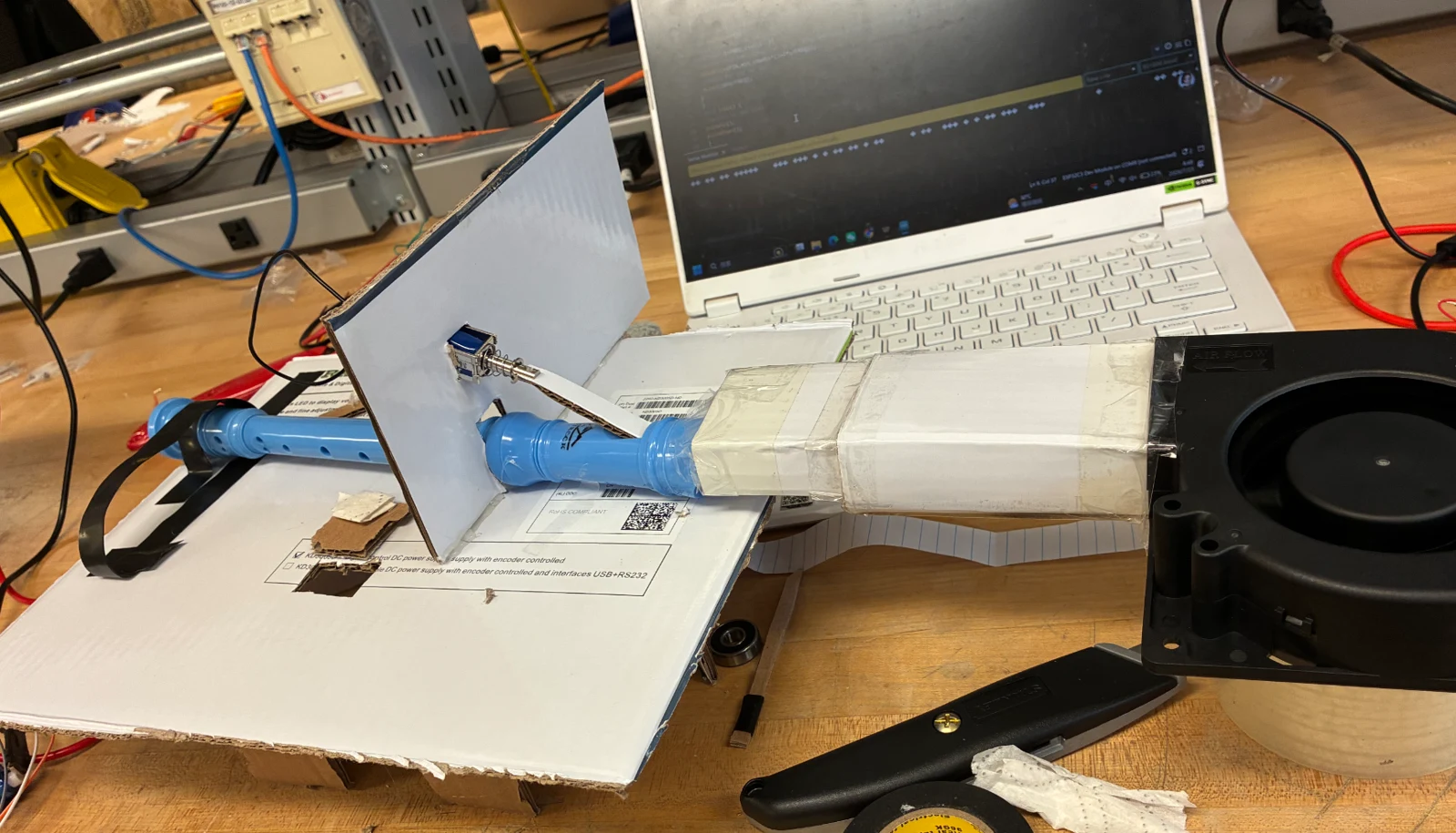
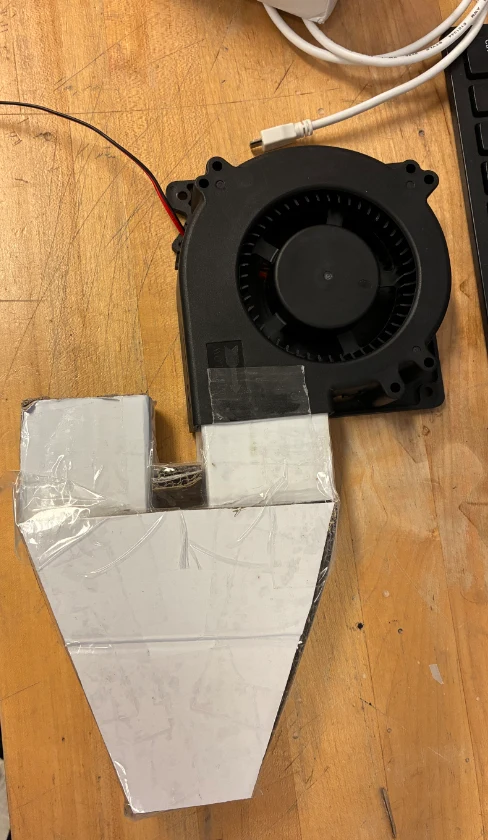
A centrifugal blower, narrowed outlet, and successive nozzle designs guided air into the recorder. We tested tunnel shapes and later manufactured them with 3D printing.
Find the fit.
Servos and solenoids actuated the finger holes. Paper strips, foam, clay, and earplug materials were tested for sealing and half-hole coverage.
Keep the time.
MIDI data became sequences of notes. Controller limits, actuator timing, Wi-Fi integration, and repeated tuning connected the parts into one instrument.
On the workbench.
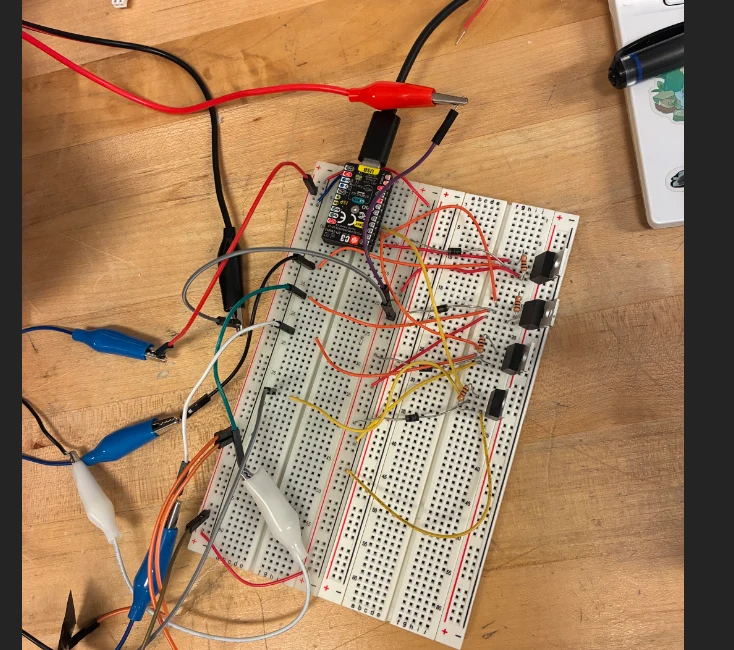
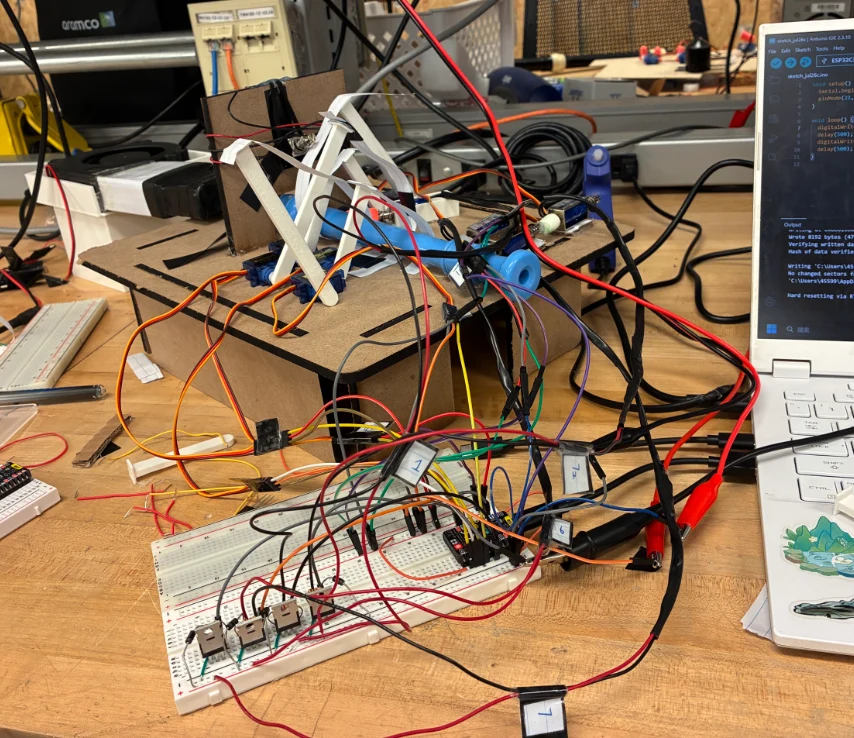
The journal records practical integration work: measuring GPIO voltages, soldering solenoid leads, checking connections, labelling wires and pin assignments, and returning to the actuators for repeated adjustments. A working instrument emerged through these small, specific decisions.
Open the notebook.
The complete journal preserves our build sequence, experiments, circuit diagram, photographs, and linked demonstrations. The fabrication and code files below accompany that process.
Engineering journal · PDF ↗Personal Wi-Fi settings are replaced with placeholders in the downloadable code and omitted from the code-iterations PDF.